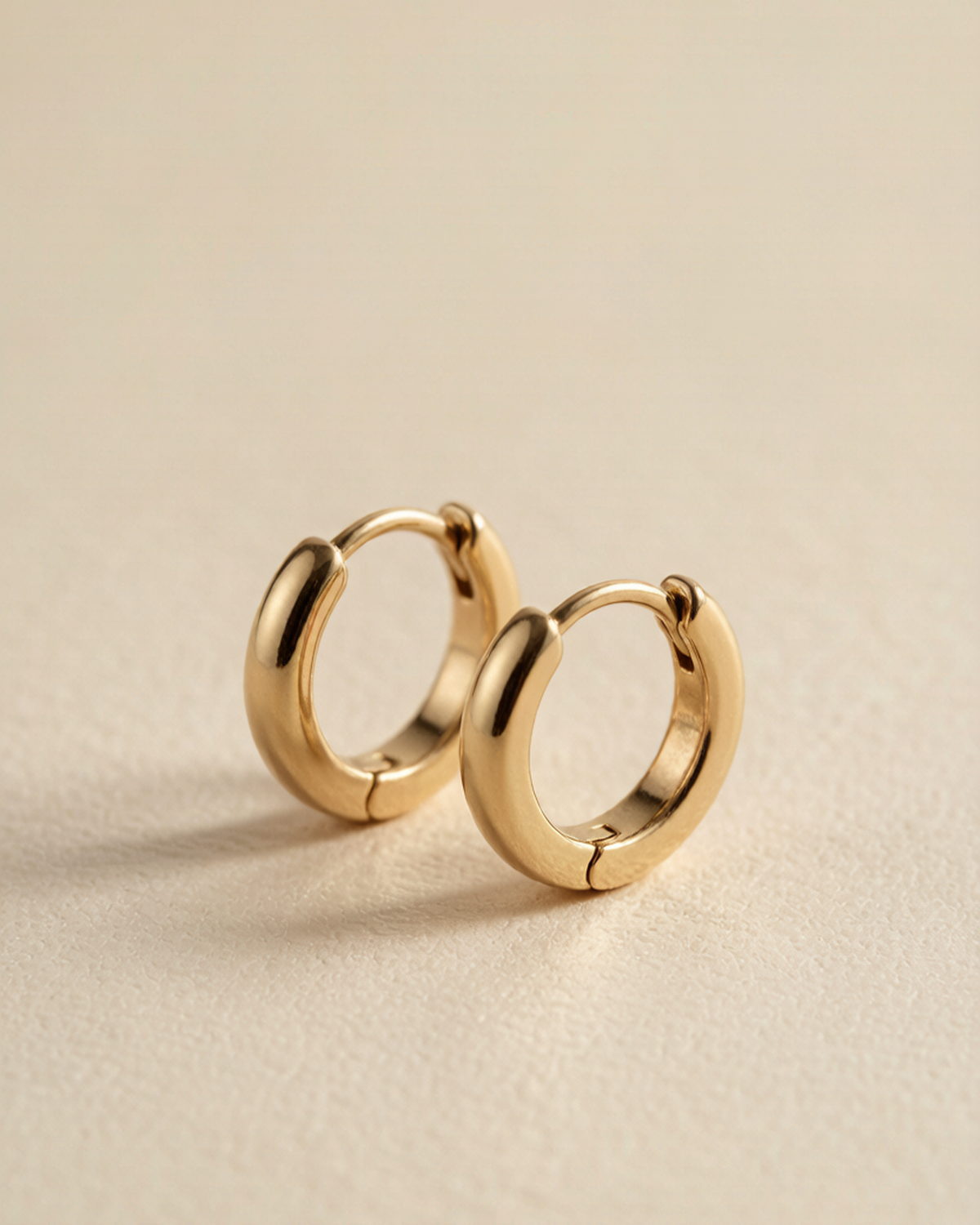
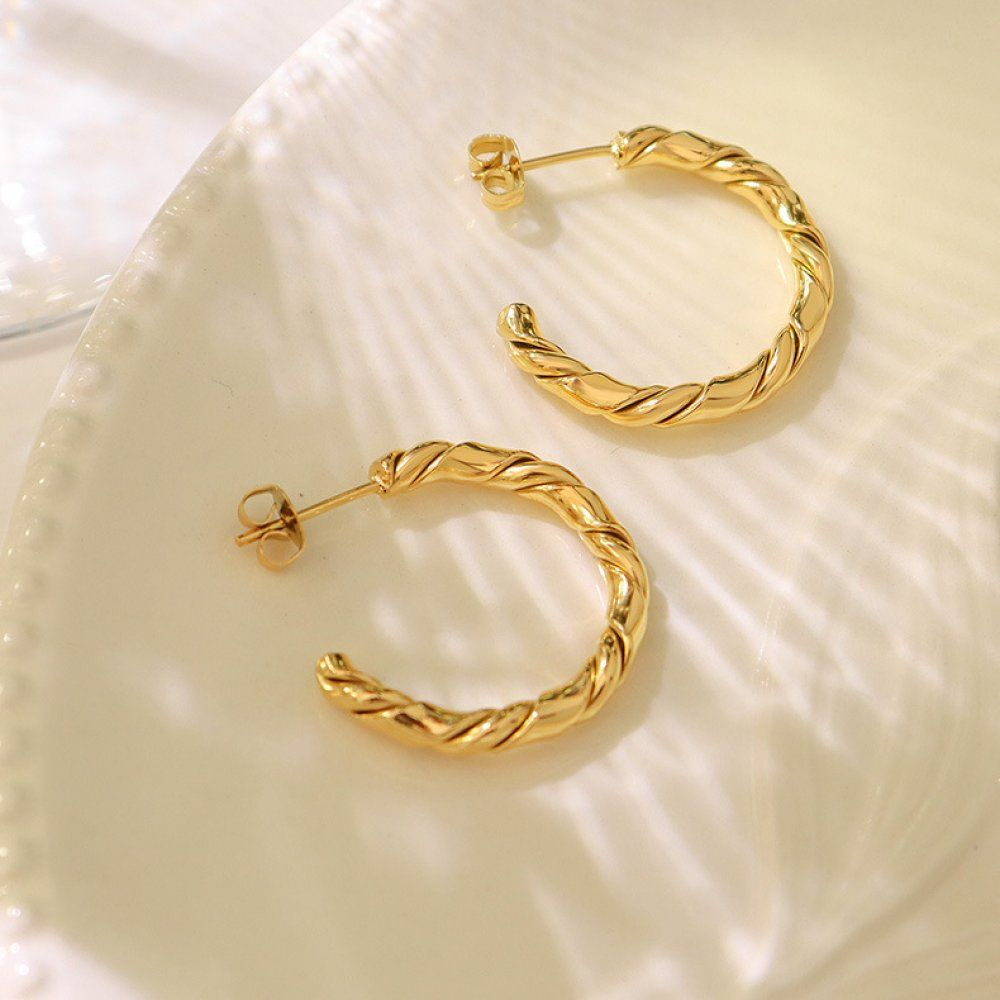
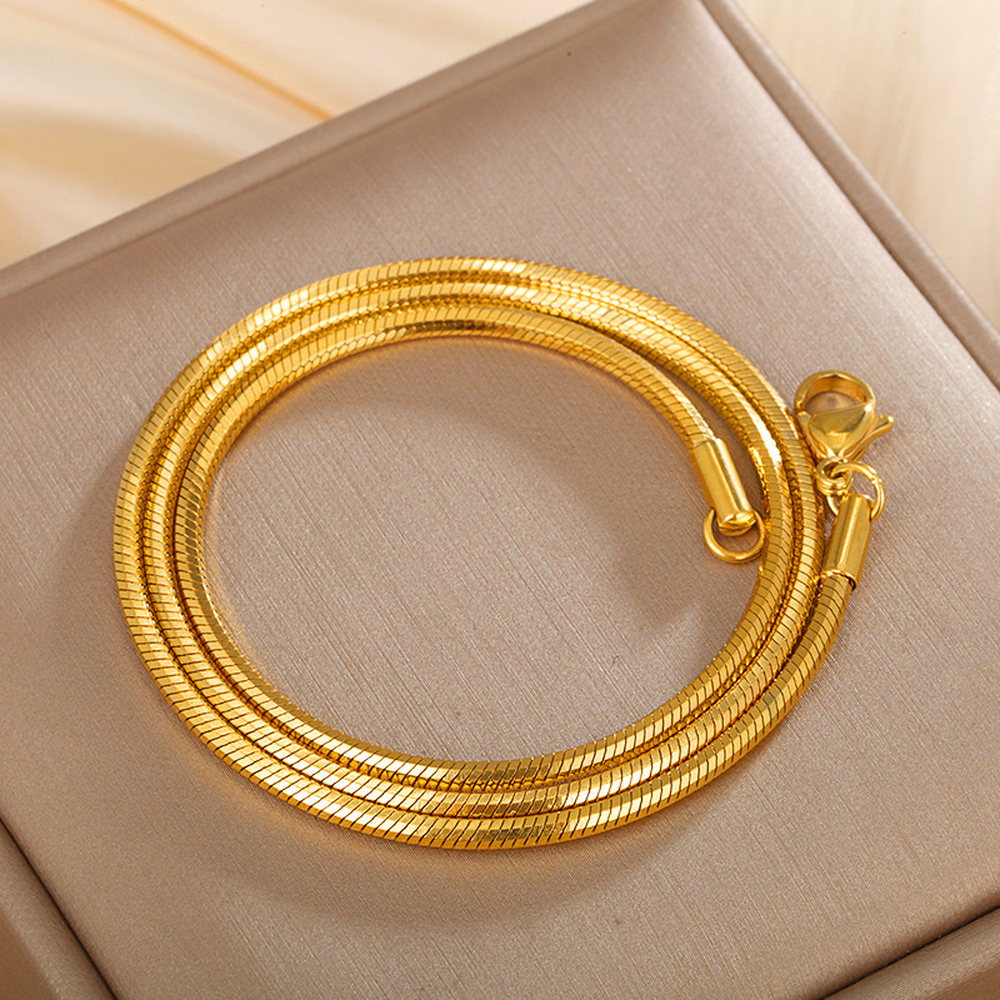
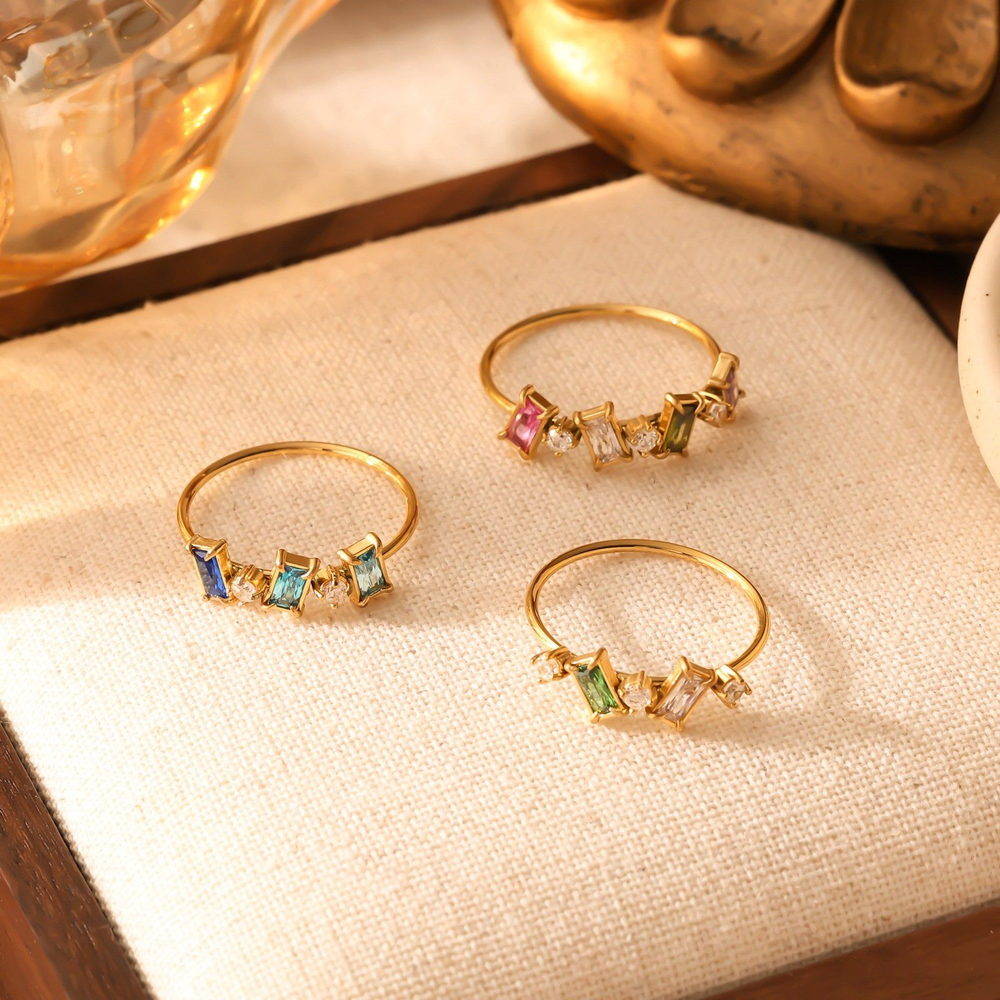
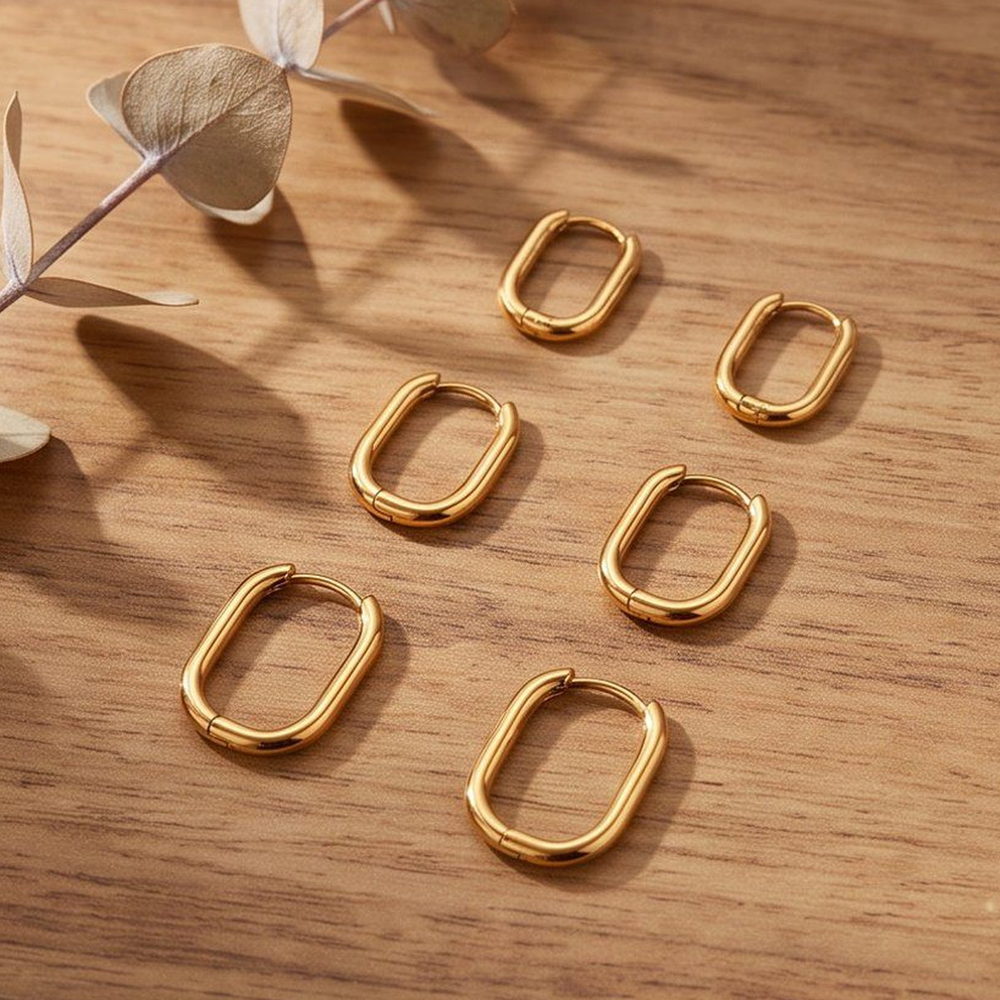
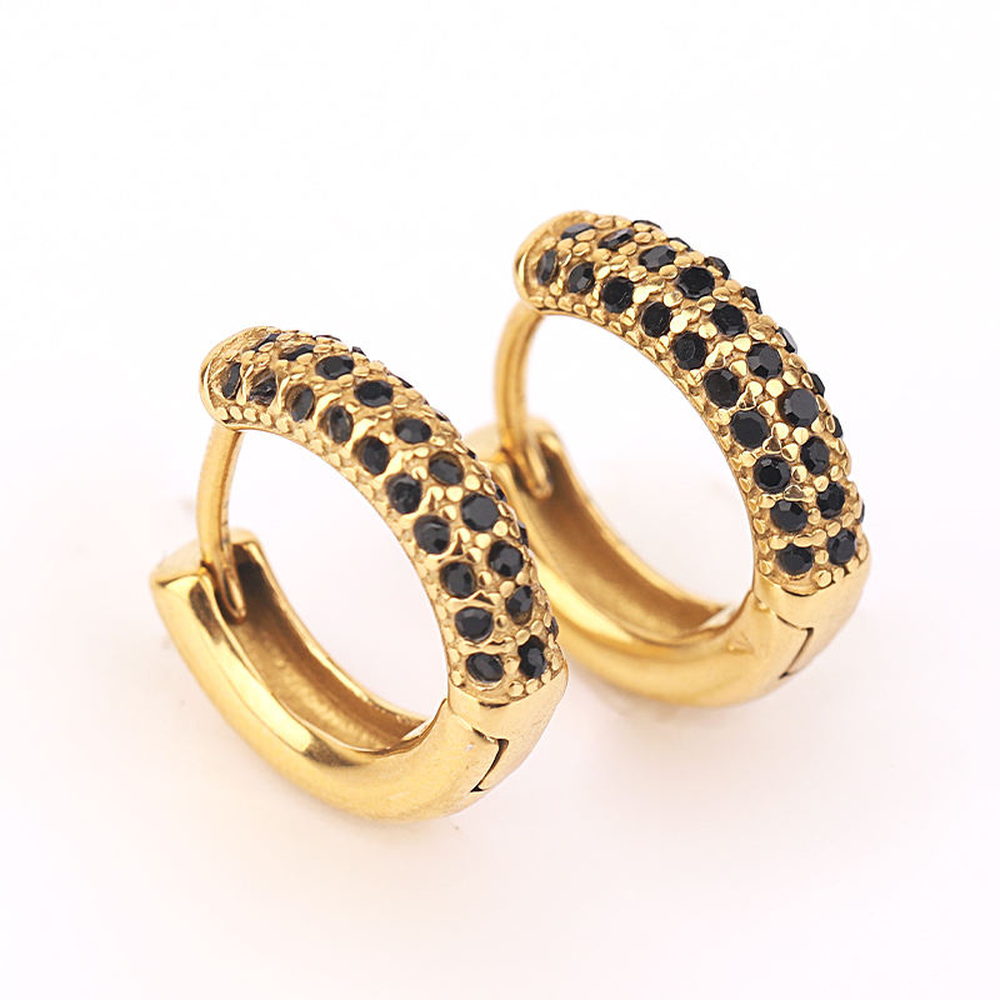
We supply gold-tone stainless steel earrings, huggies and selected fashion jewelry to small brands — the working line is 316L stainless steel with gold-tone plating, most often PVD where confirmed by the supplier. Most first orders start smaller than that: send one reference and we build a 2–5 style sample board, checking base material, plating route, ear posts, stone setting, packaging and MOQ before you commit to volume.
Style reference
Most jewelry buying problems do not start with price. They start with a sample that looked right in a photo and arrived different in bulk — a plating tone that shifted, a stone setting with glue marks, an ear post that bent. Selling you the goods is only half the job; catching that difference before you spend on production is the other half.
Send a link, a screenshot, or a photo of something close. We come back with 2–5 checked styles matched to your brand look and price band, so comparison stays fast enough to decide on.
Base material, plating route, ear post construction, stone setting and adhesion, polish, clasp tension, and finish consistency — checked on photos and on the physical sample where possible.
MOQ, sample fee, sample time, bulk lead time and packaging spec are confirmed in writing before you commit — not agreed verbally and remembered differently later.
Earrings are the narrow wedge we are known for. Necklaces and rings run on the same 316L base where the supplier confirms it, the same plating route and the same checking routine, which is why they were added before any other category.

Croissant texture, twist, beaded, plain polished, pave CZ and pearl or small-stone variations. This is the category where the compliance bar is highest, so it sets the standard the rest follow.
See the directions
Snake and herringbone chains, bead chains, and small pendants. Same base material and the same plating route as the earrings, which is why a boutique can build a matching set instead of buying single items.
See the directions
Rope and twist bands, plain bands, and small set-stone styles. We steer ring sampling toward open or adjustable bands, because fixed sizing multiplies the SKU count before a brand has even tested the style.
See the directionsA board of three to five styles is not a limitation, it is what makes the comparison possible. When every style on the table uses the same base material and the same plating route, the difference you are looking at is design — not chemistry. That is what keeps an early buying decision fast enough to actually make.
Material choice drives everything downstream: what can be promised, which suppliers can quote, and where the real risk sits. This is the short version — the full reasoning, limits and documents sit on the materials page.
316L is not a nickel-free material — it contains nickel. What matters is that the nickel is locked into the alloy structure, so release stays very low in wear conditions. That is why a nickel-release report on 316L is a routine request rather than a special project.
PVD gives a harder, more wear-resistant gold layer than conventional electroplating. It is a better process, but it is not a warranty. We describe the process and ask suppliers for durability test data instead of promising a wear period.
Copper and zinc alloy are useful for fast turnaround and price-sensitive quotes. For any component that sits inside a piercing — ear posts, hinges, anything that goes through the skin — our preferred route is 316L stainless steel. Copper or zinc-alloy alternatives for pierced components are reviewed case by case, against supplier documents, before we agree to sample.
Build a 2–5 style direction based on your current brand look and price band.
Review base material, plating route, MOQ, sample fee, sample time, and bulk lead time.
Track product photos, stone setting, finishing, clasp, ear post details, and packaging.
Compare approved samples with bulk pre-shipment photos before release decisions.
A sample that passes is not the same as a production run that matches. We document the approved sample on the points that actually move — plating tone under daylight, stone coverage, polish under magnification, ear post thickness, and closure tension — then compare those same points against bulk pre-shipment photos.
Checked under daylight, not studio light.
Post thickness, snap and hinge behaviour.
Coverage, visible adhesive and polish.
Opening, closing and daily-wear tension.
Pouch, box and barcode details photographed.
Approved sample vs pre-shipment bulk photos.
Being clear about the second list saves both sides time.
No. Send a reference direction, an image, or even a link to something close. The first round exists exactly to turn a fuzzy direction into a 2–5 style board you can compare side by side.
The working line is 316L stainless steel with gold plating, most often PVD where confirmed by the supplier. Copper and zinc-alloy gold plating stays available for fast turnaround and lower entry price. For any component that sits inside a piercing, our preferred route is 316L; alloy alternatives there are reviewed case by case against supplier documents before we agree to sample.
These depend on the style, base material, and plating route, so they are confirmed case by case before quoting. We do not publish a blanket number, because a blanket number is usually wrong by the time it reaches a real supplier.
We can request supplier declarations, product details, and test documents when they exist. We do not certify those claims ourselves, and we do not put a wear-time or warranty period on a page. If a claim cannot be documented, we will say so instead of printing it.
No — 316L contains nickel as part of the alloy. The reason it is the working line is that the nickel is bound inside the alloy structure, so release under wear conditions stays low. We ask suppliers for the nickel release test documents rather than making a nickel-free claim.
That is what step 4 is for. We compare the approved sample against bulk pre-shipment photos on plating tone, stone setting, polish, ear post, and finish before you release the order.
We are a trading company based in Qingdao, China. We do not run a factory — we hold the order ourselves: we quote it, buy it and ship it. Because we are not tied to one production line, we can compare suppliers on base material, plating route and ear post before we quote, instead of defending whatever a single factory happens to make. Jewelry Supplier Pro is independent from SX Jewelry.
Reference material is used only to build your sample direction and to brief suppliers on your project. We do not republish your references, and we do not show your project to other buyers.
You do not need the specification final — that is what the first round is for. Fill in what you already know and we will come back within one to two business days.
Send the retail price you are targeting and one reference. We will tell you which route is realistic and which one is not, before you pay for samples.