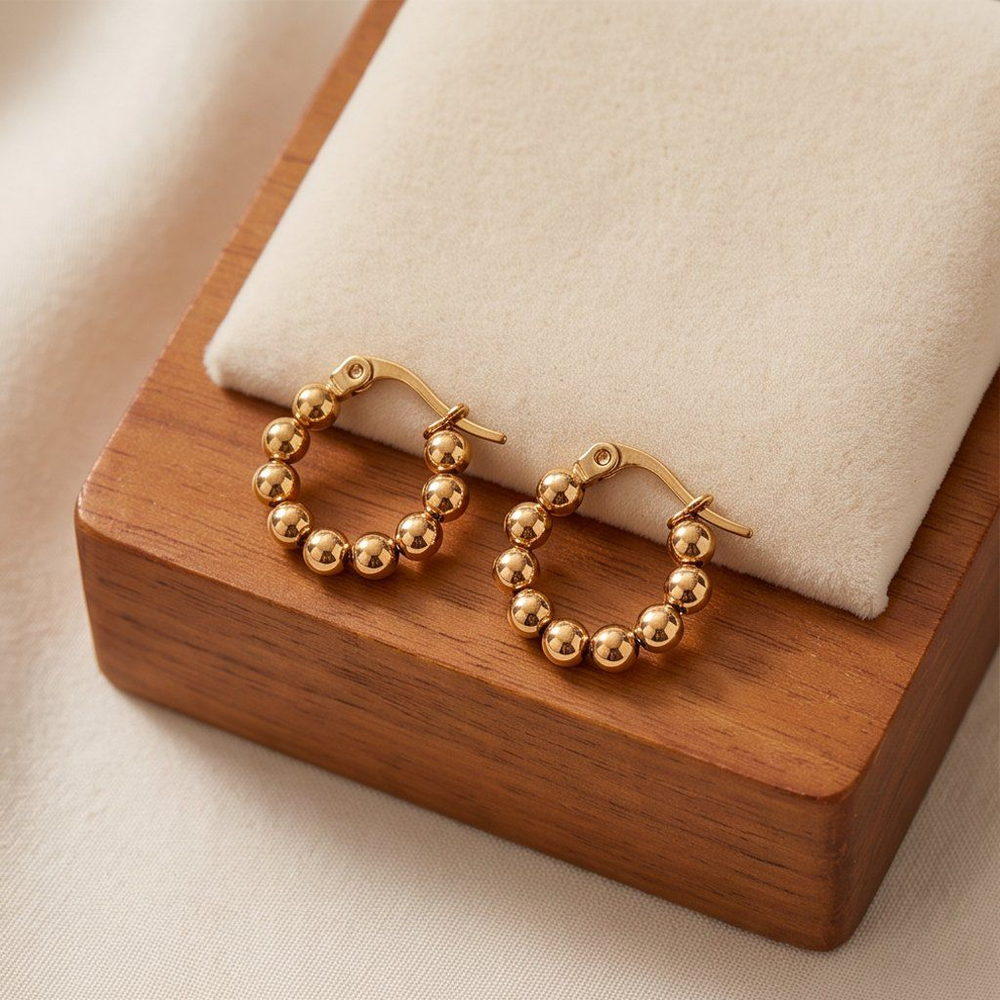
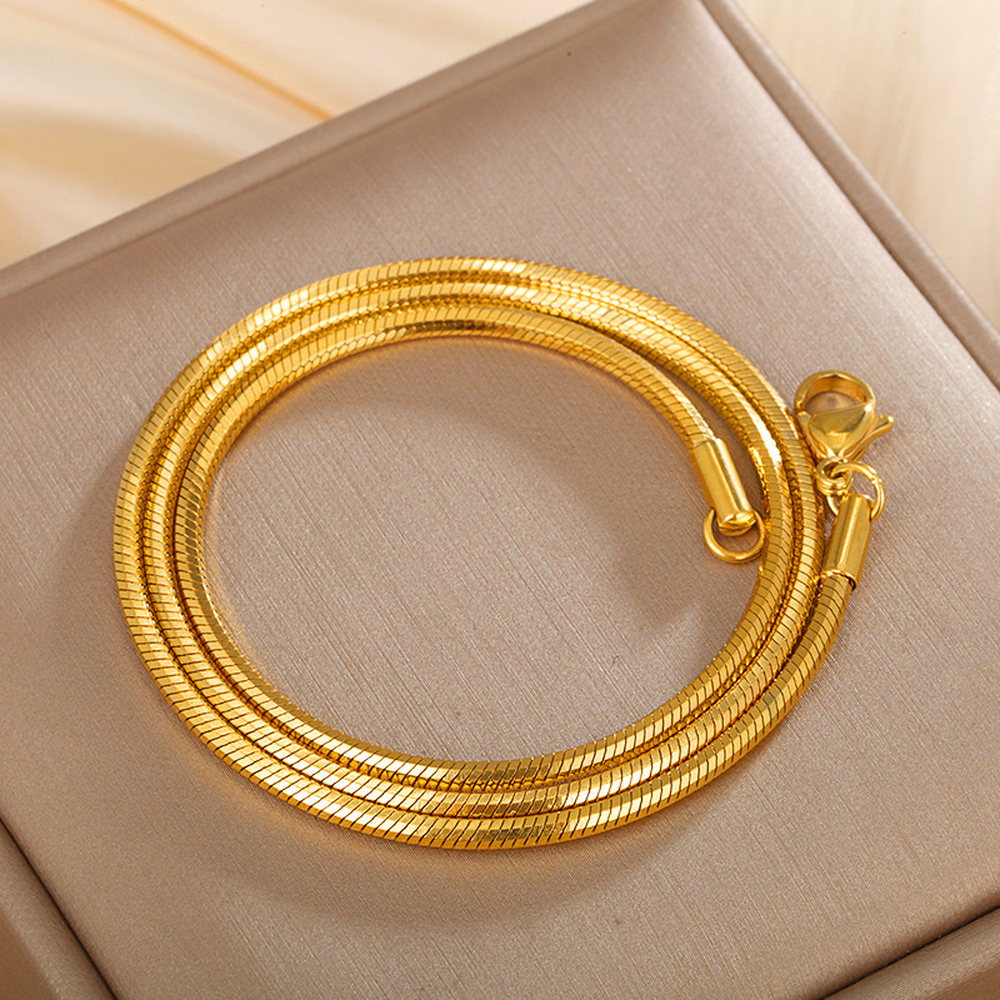
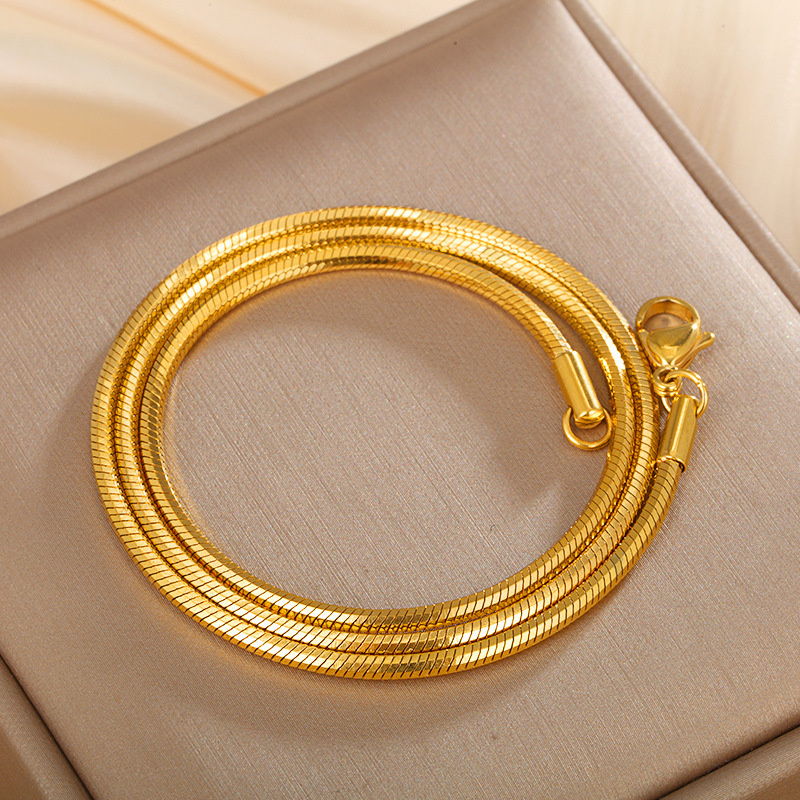
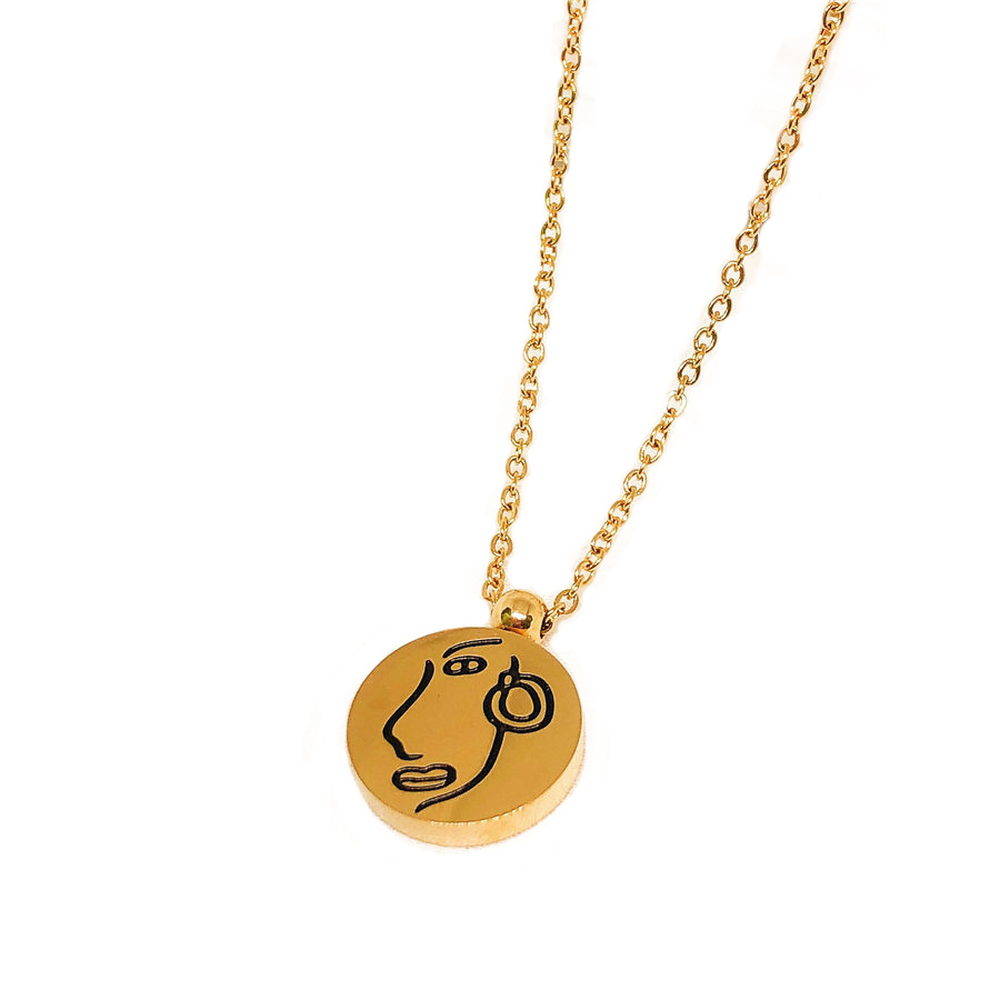
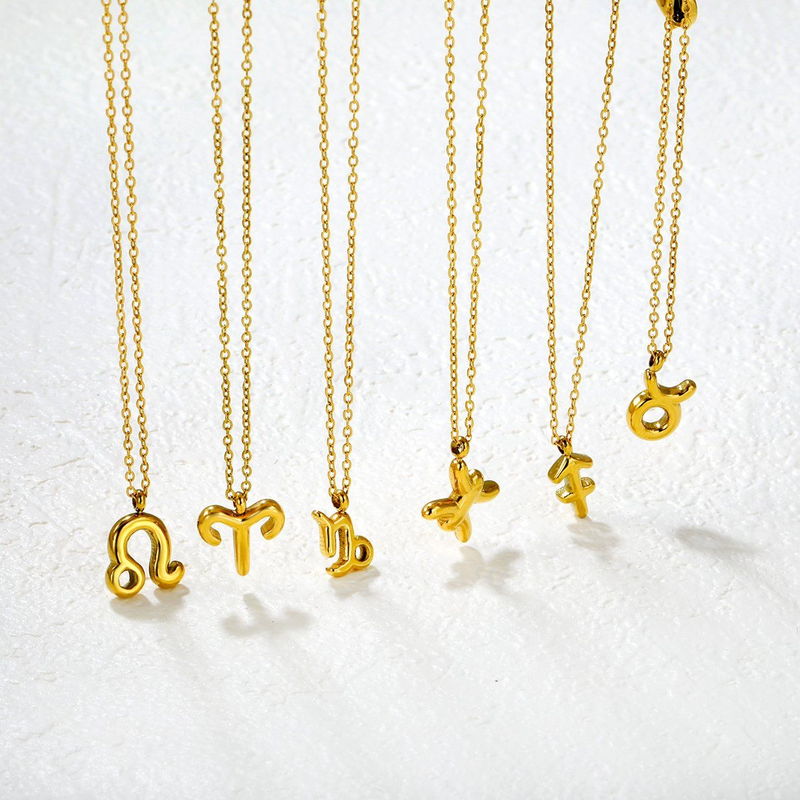
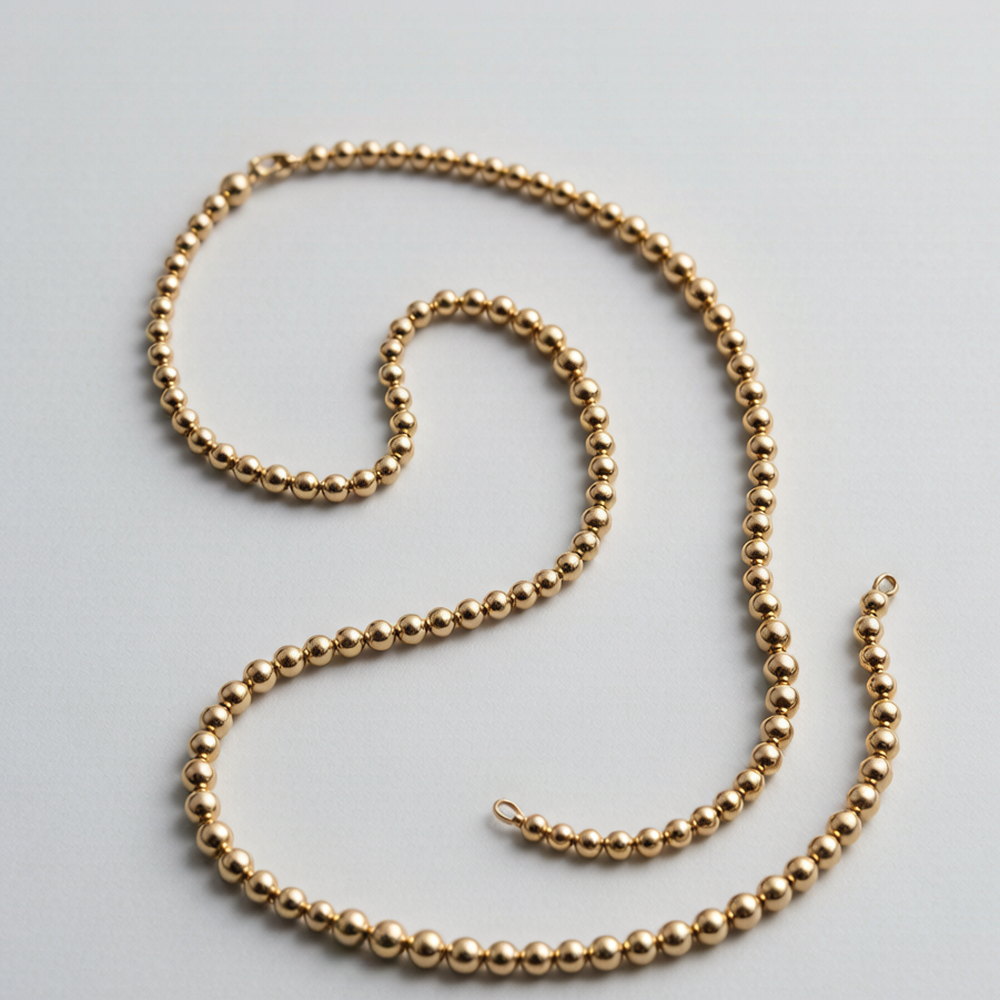
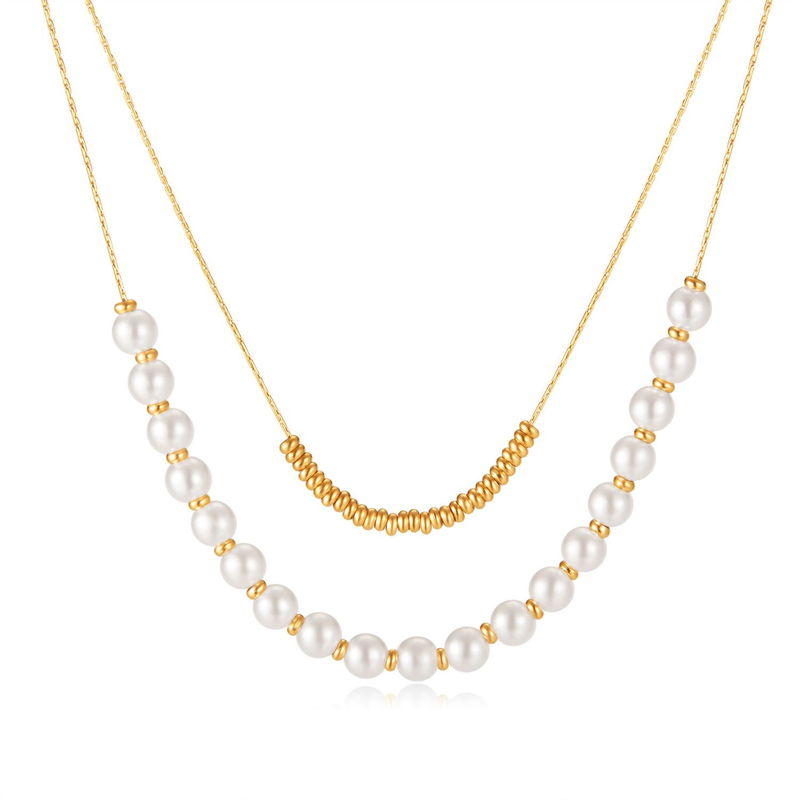
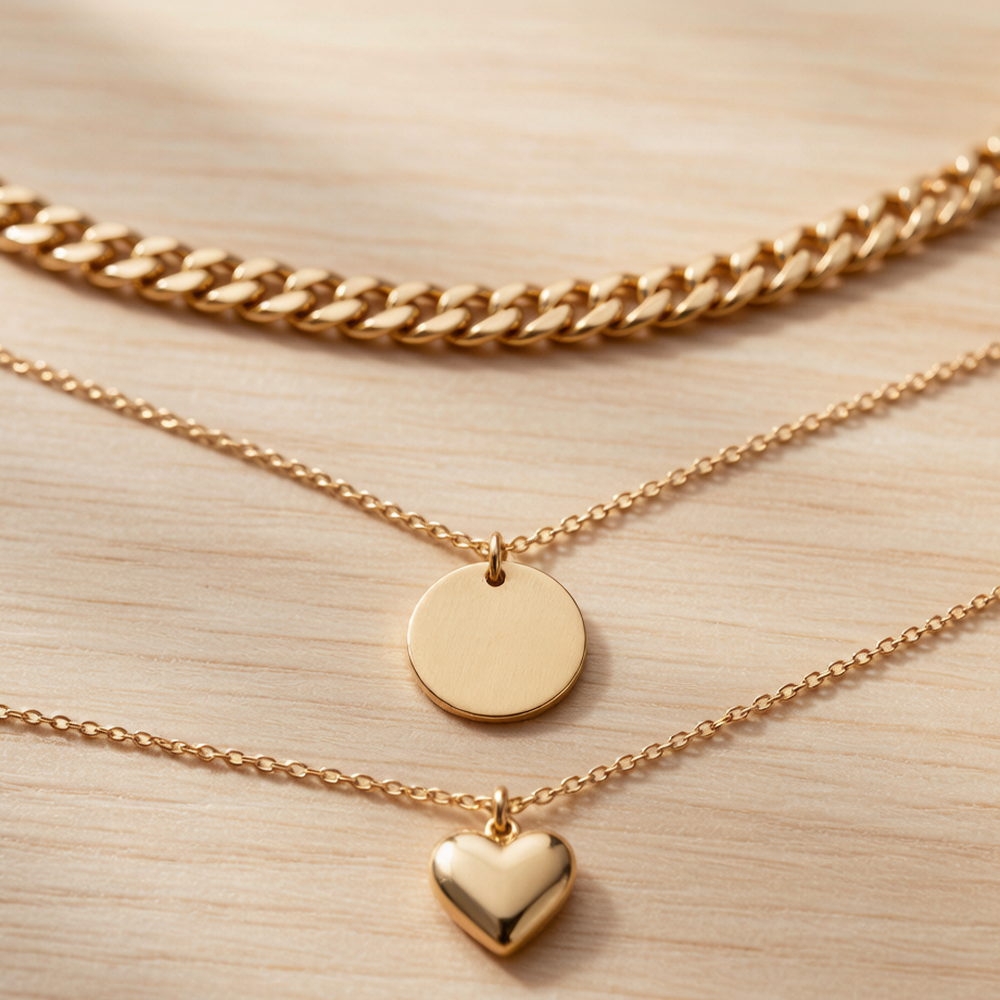
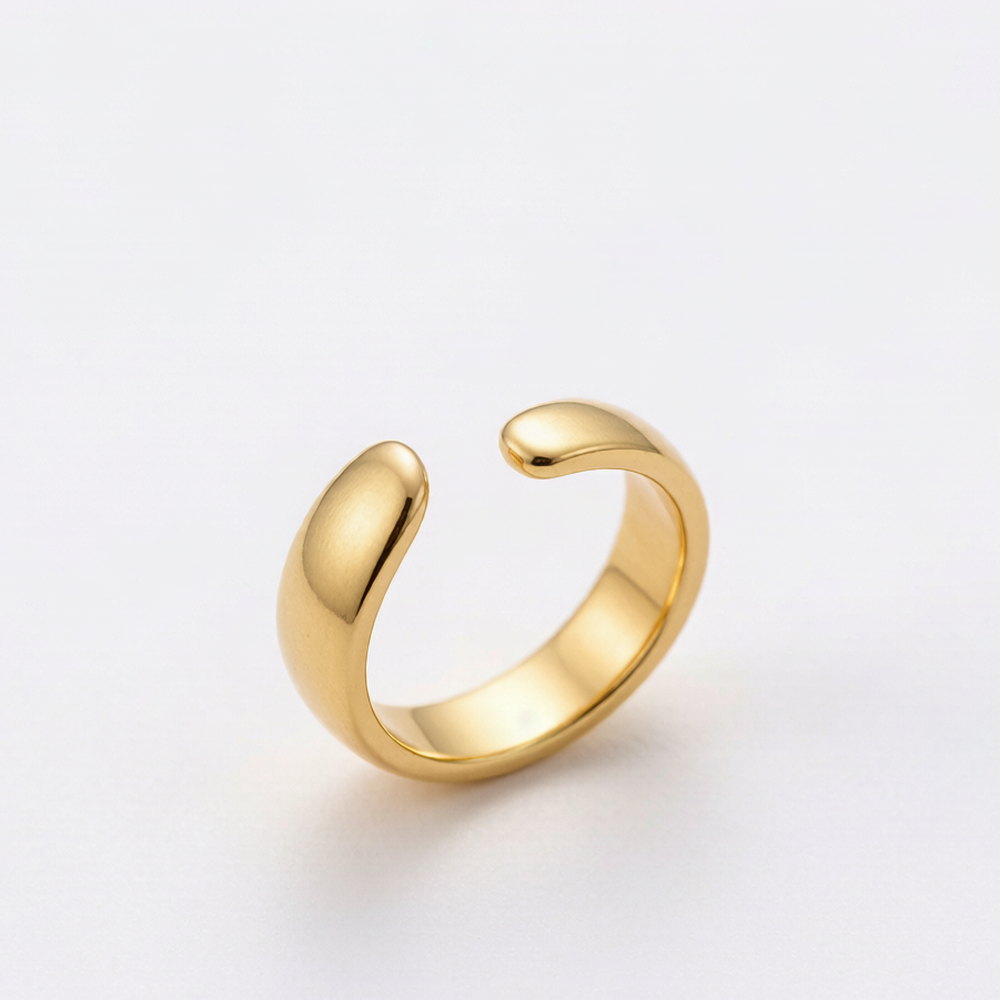
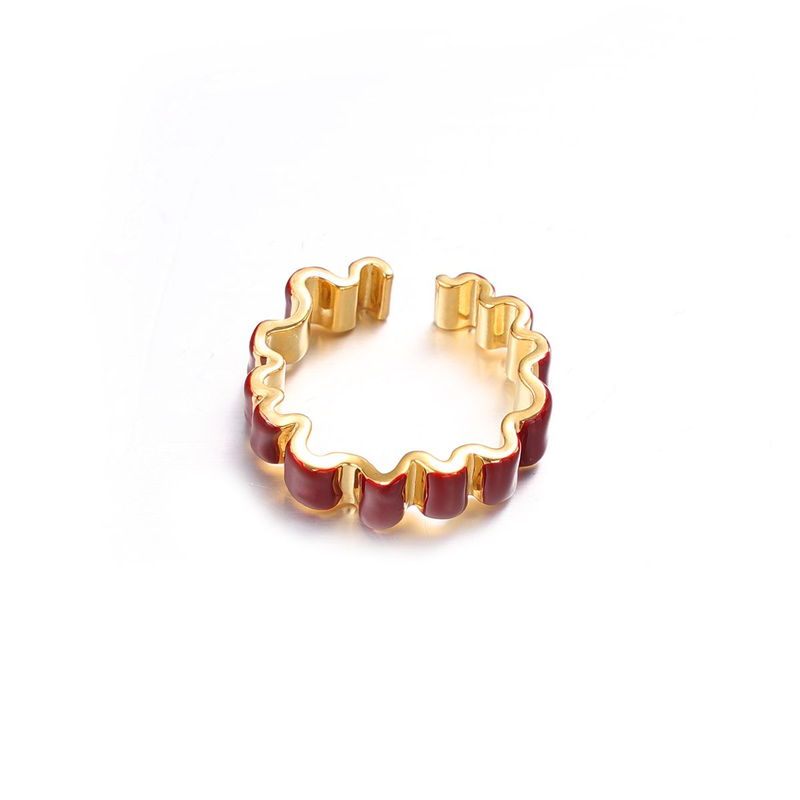
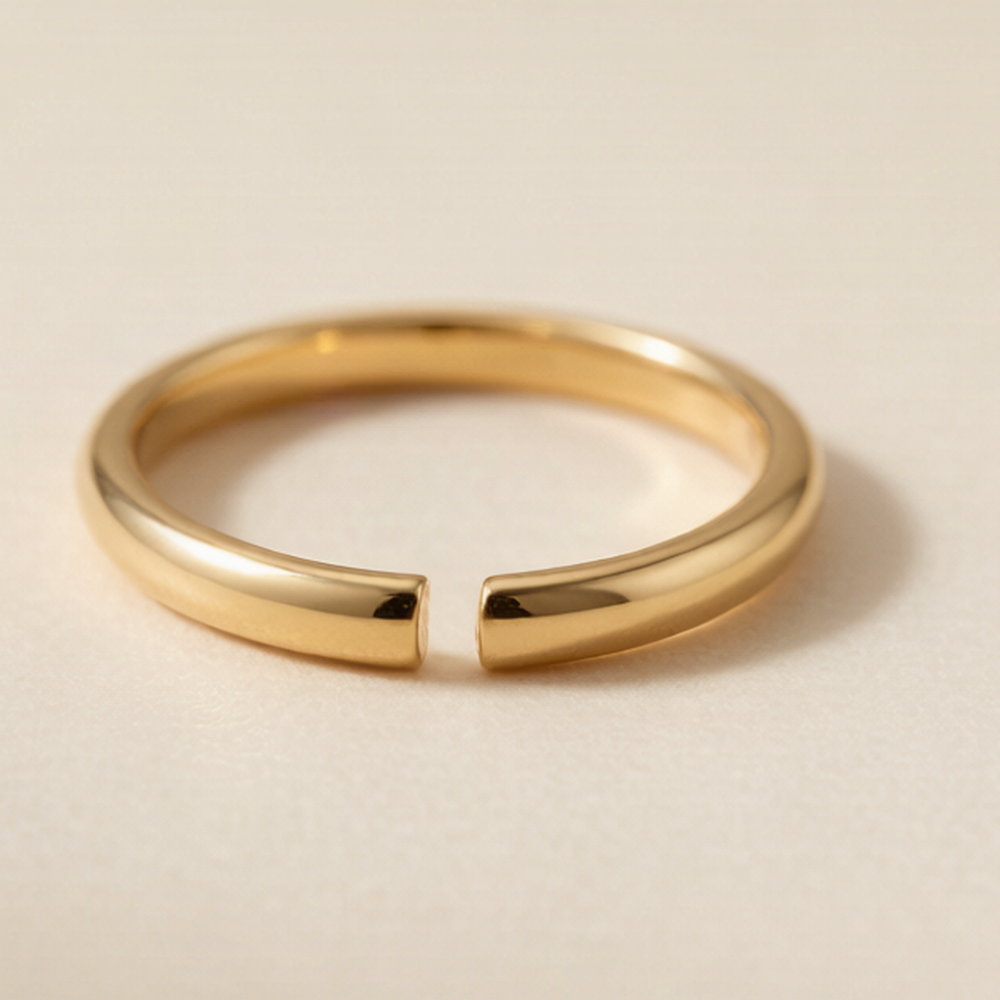
Each direction below is a starting point, not a fixed catalog. You send one reference; we widen or narrow the board from there. Every category runs on the same 316L stainless steel base and the same plating route, which is why a first earring board can grow into a matching set instead of a pile of unrelated items. Each direction carries two views — a product shot and a second angle, worn on a model, shown as a size run, or laid out flat — because scale is the one thing a single photograph cannot tell you.
Every direction is quoted on the same small set of figures. When a direction is confirmed we send these for the exact pieces we sample — not for the photograph. The drawings below are schematic and not to scale.
This is the narrow wedge we are known for, and it is also the category where the compliance bar is highest — an earring post sits inside a piercing, so the nickel question is not optional. Getting it right here sets the routine that necklaces and rings then inherit.
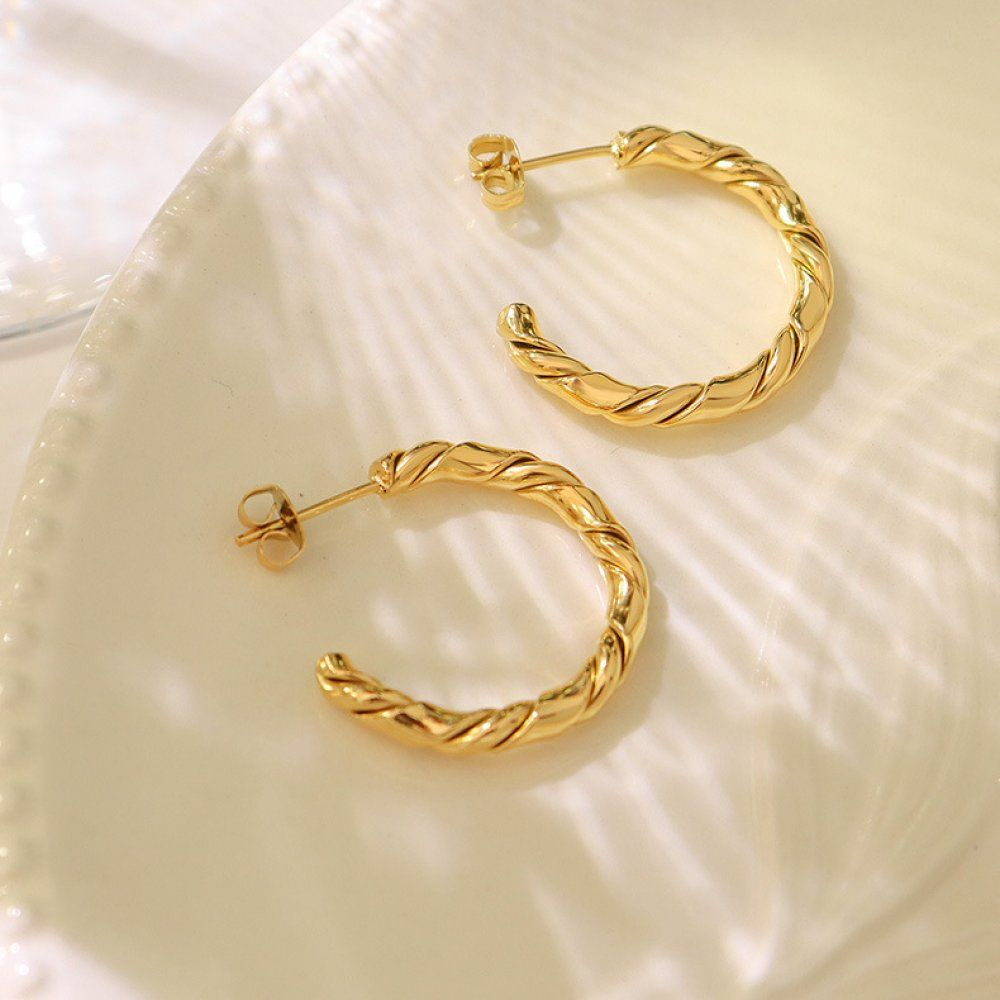
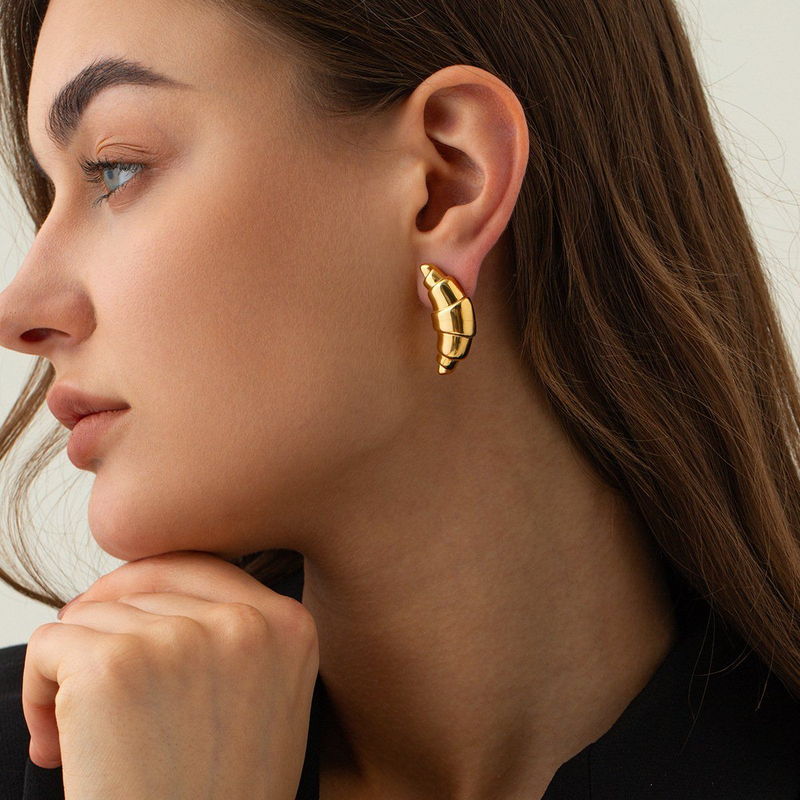
Croissant texture, twist and ribbed finishes. Lowest production risk and the fastest sample cycle — the right place to start if you have not sourced this category before.
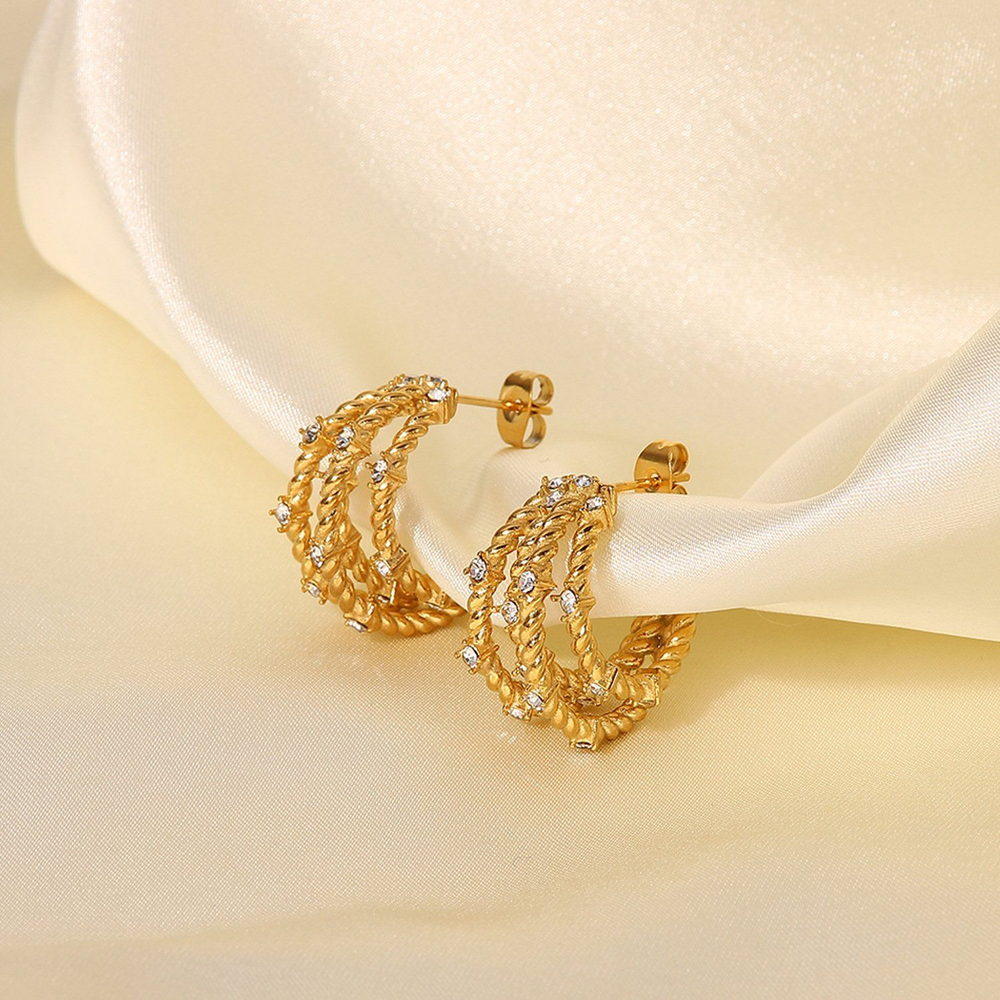
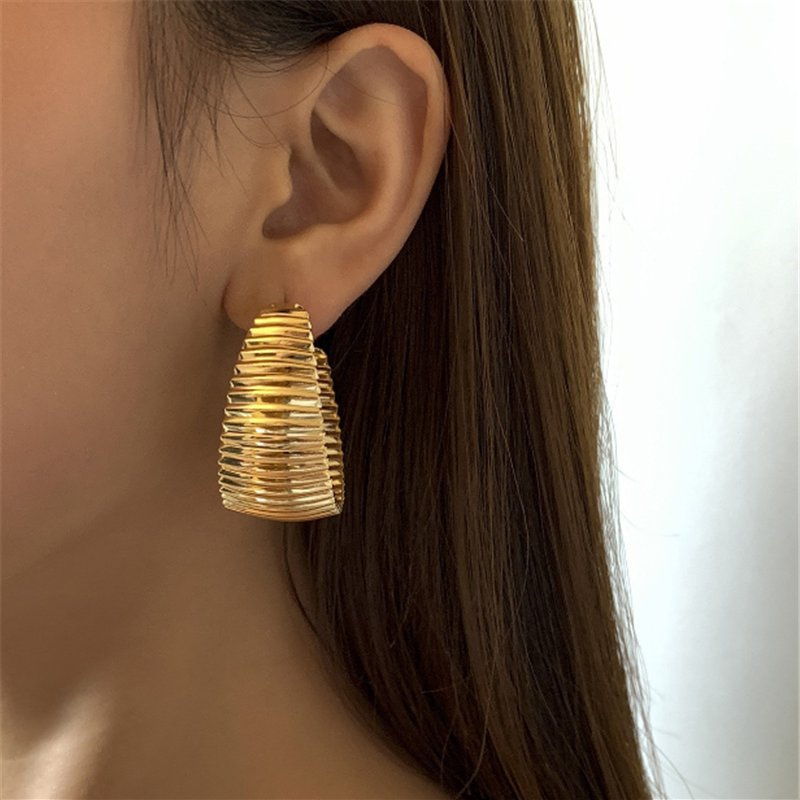
Several fine wires grouped into one hoop. Visually rich and forgiving on small stones, but the bulk risk is the wire spacing drifting between pieces.
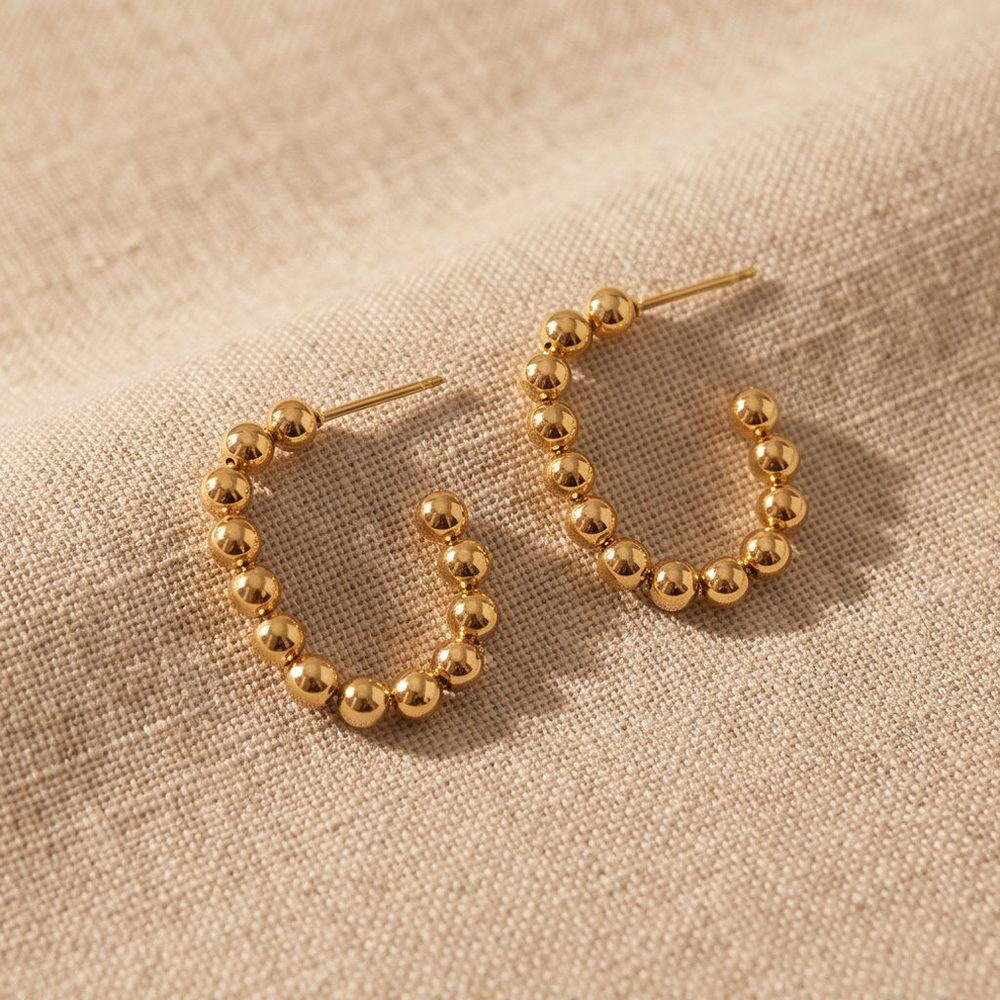
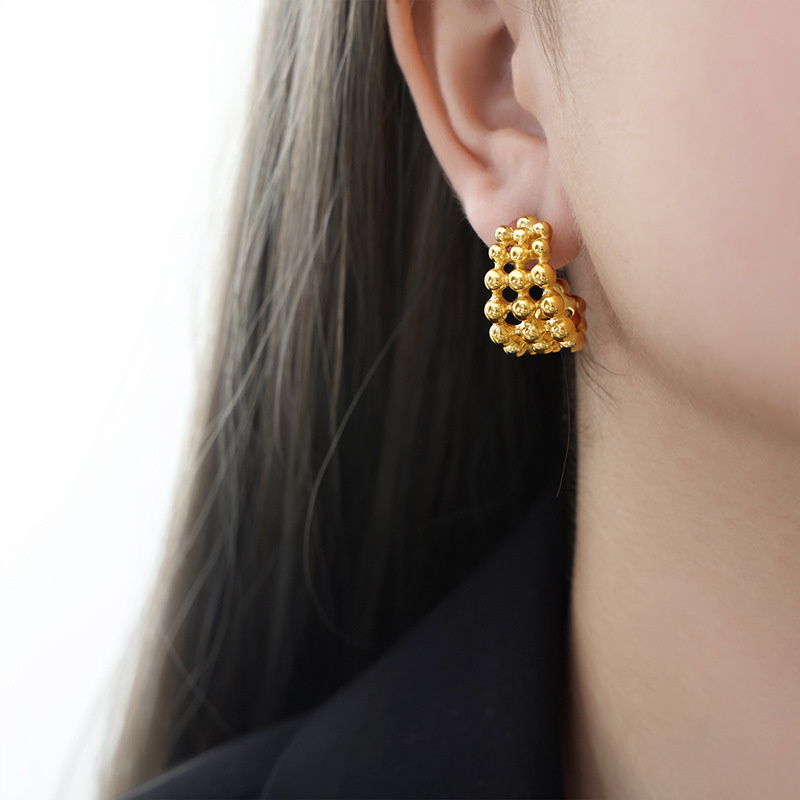
A row of small spheres along the outer face. Reads as hand-work at a distance, and hides minor plating variation better than a mirror polish does.
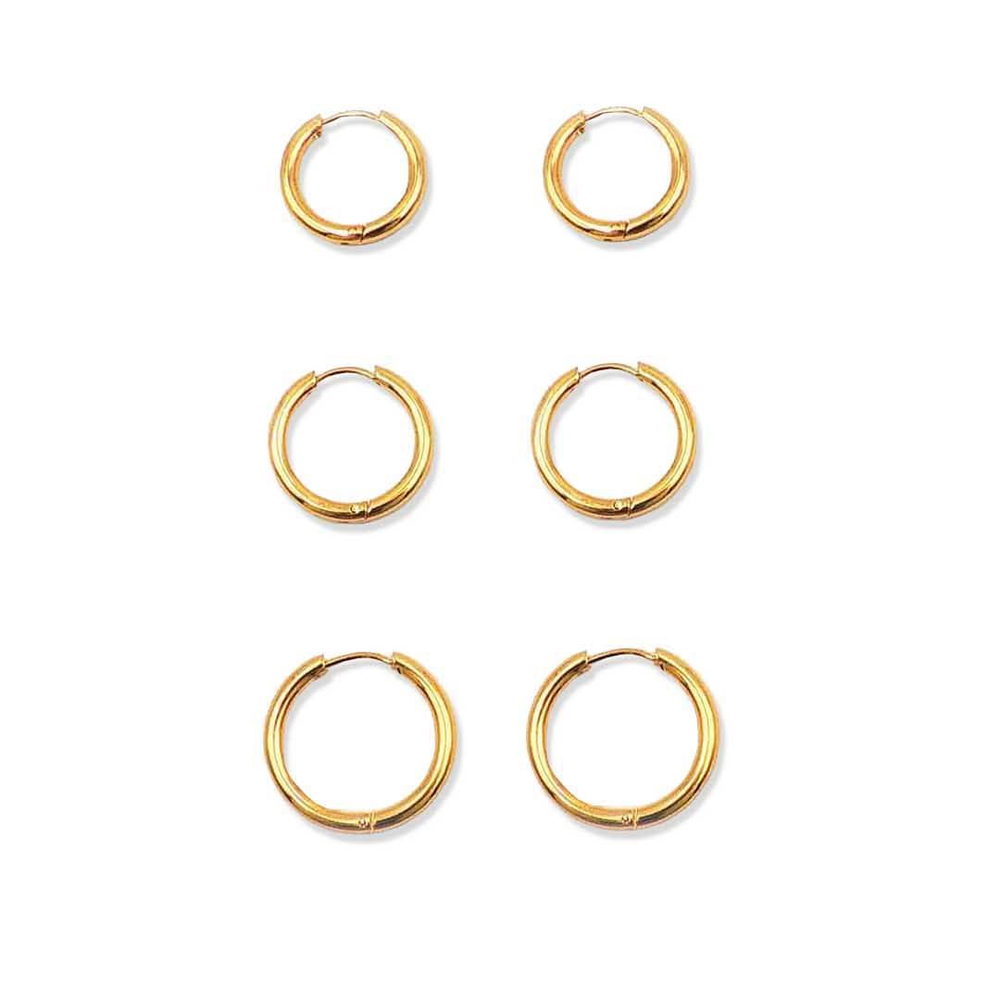
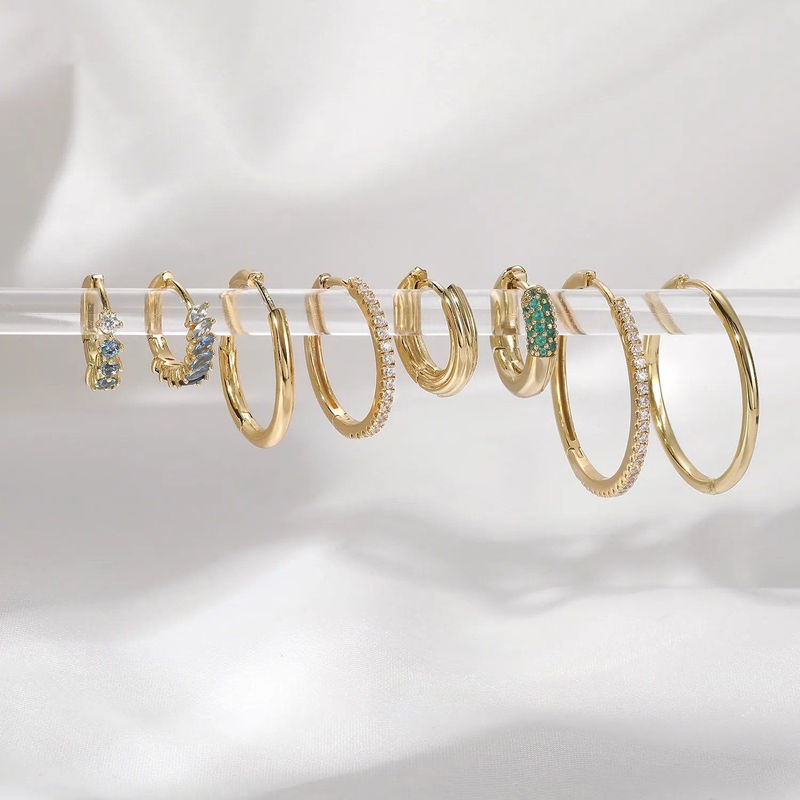
No texture, no stones — which makes it the hardest direction to hide a problem in. Plating tone and edge polish are the whole product here.
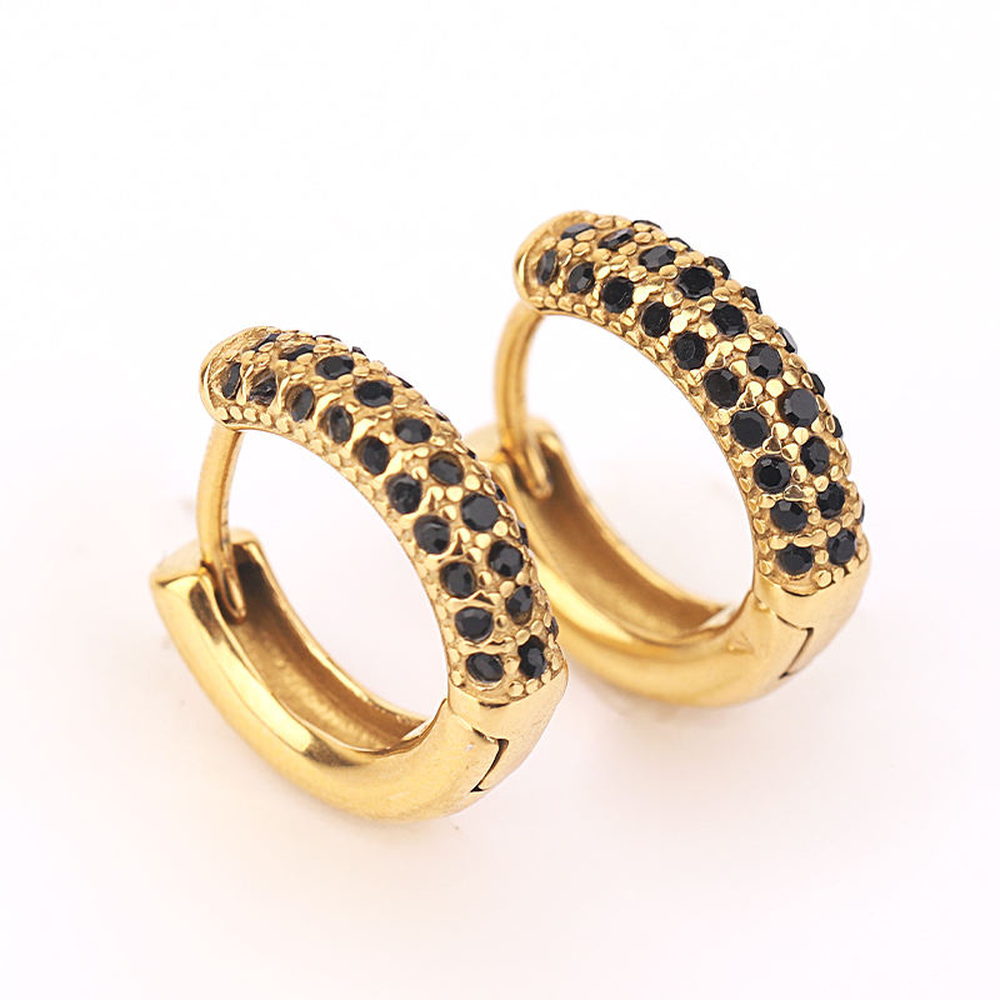
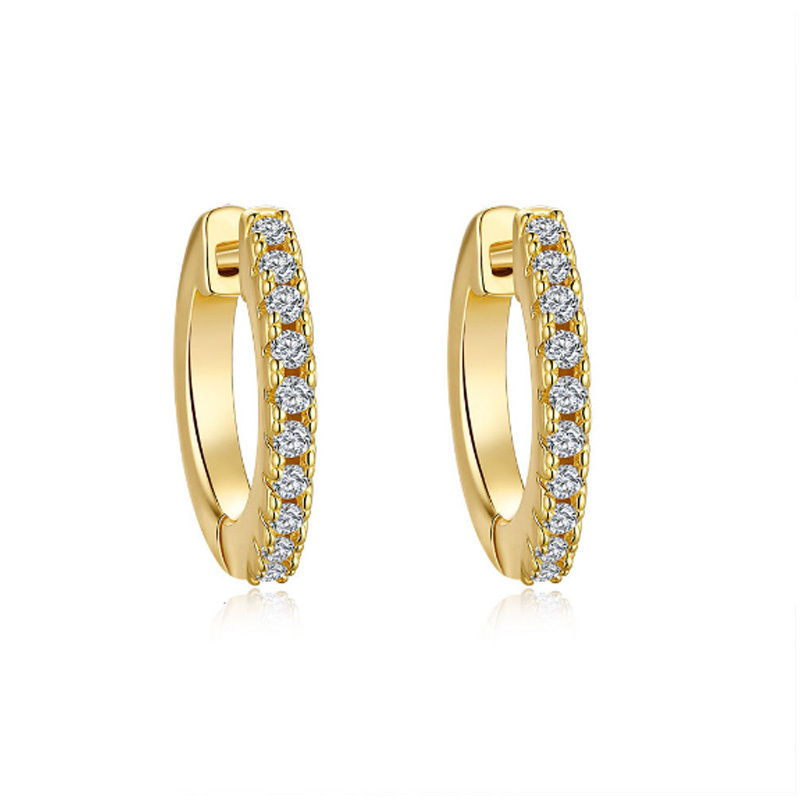
Small-stone huggies where setting quality decides whether the piece reads as jewelry. Setting gaps, tilt and visible adhesive are the failure points. The two views carry different stone colours on purpose — the setting and the row density are what get specified, not the colour.
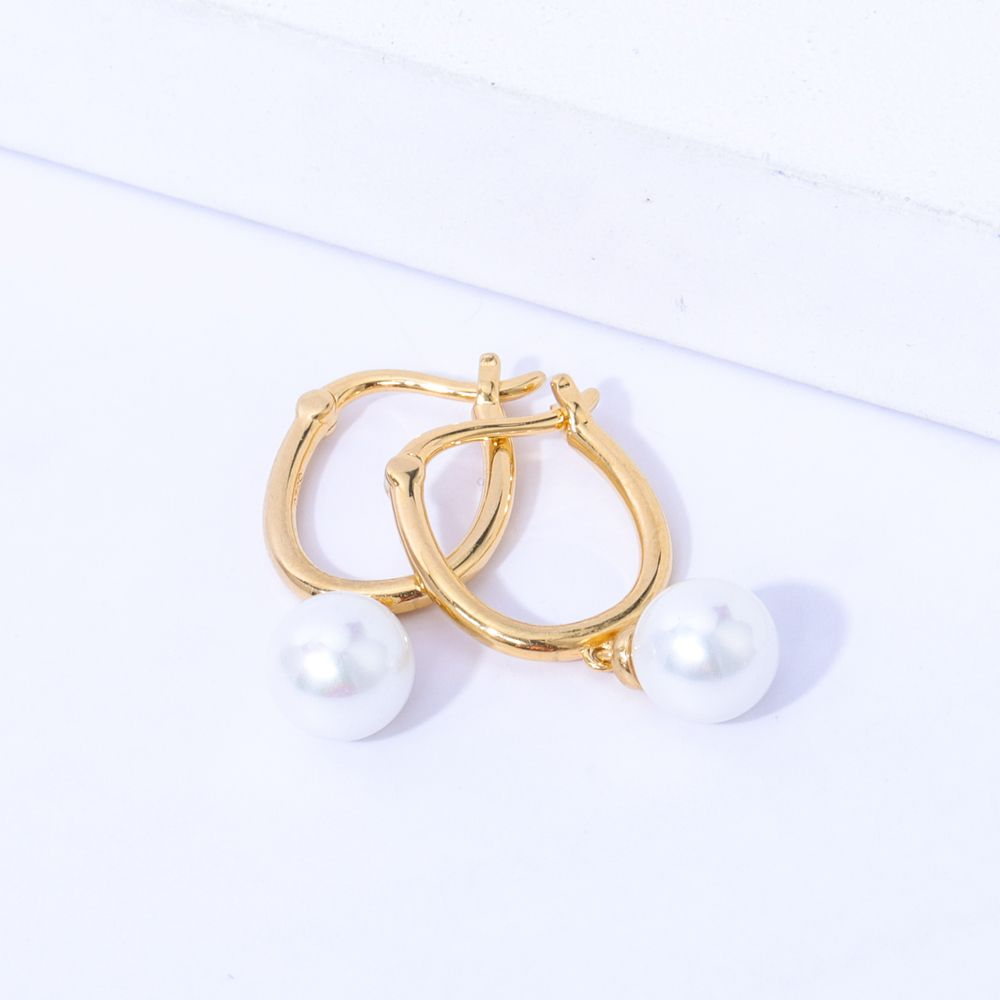
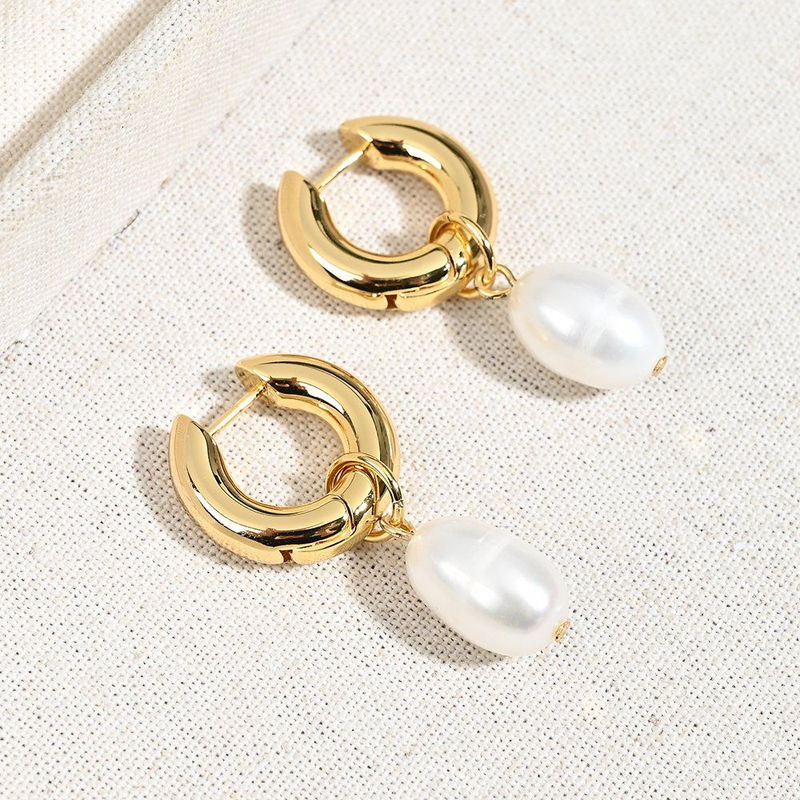
One or two visual variations to extend an existing board. Kept deliberately tight, so a collection gains a second shape without opening a second category. The two views are a round pearl and a baroque drop — the pearl gauge and the drop fitting are what get specified.
This is the first category we add after earrings, because it is the cheapest possible extension: the same buyers, the same 316L supply chain, the same plating route, and the same test logic. It is what turns a single-item order into a collection order.


Flat, flexible and hard to fake — the link edges and the flatness of the surface show immediately whether a factory knows this chain type.


A small stamped or engraved pendant on a fine cable chain. The risk is not the pendant, it is whether the chain gauge suits the pendant weight.


Small uniform beads on a fine gauge. Quiet, easy to layer, and a good test of whether a supplier can hold consistent spherical shape at small size.
Rings are the third category, and the one with a specific trap: fixed sizing. A ring style in five US sizes is five SKUs before anyone has tested whether the style sells. So ring sampling here leans toward open or adjustable bands first, and fixed sizing only after a style proves itself.


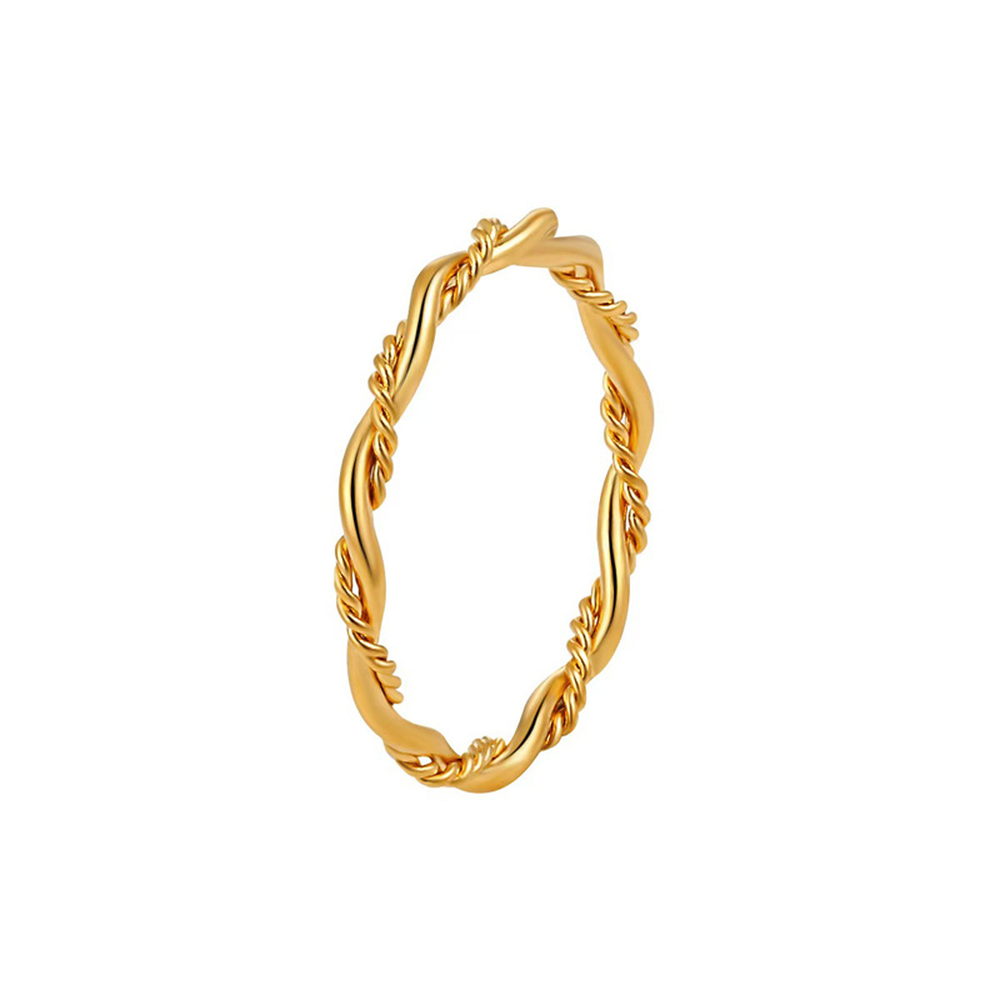
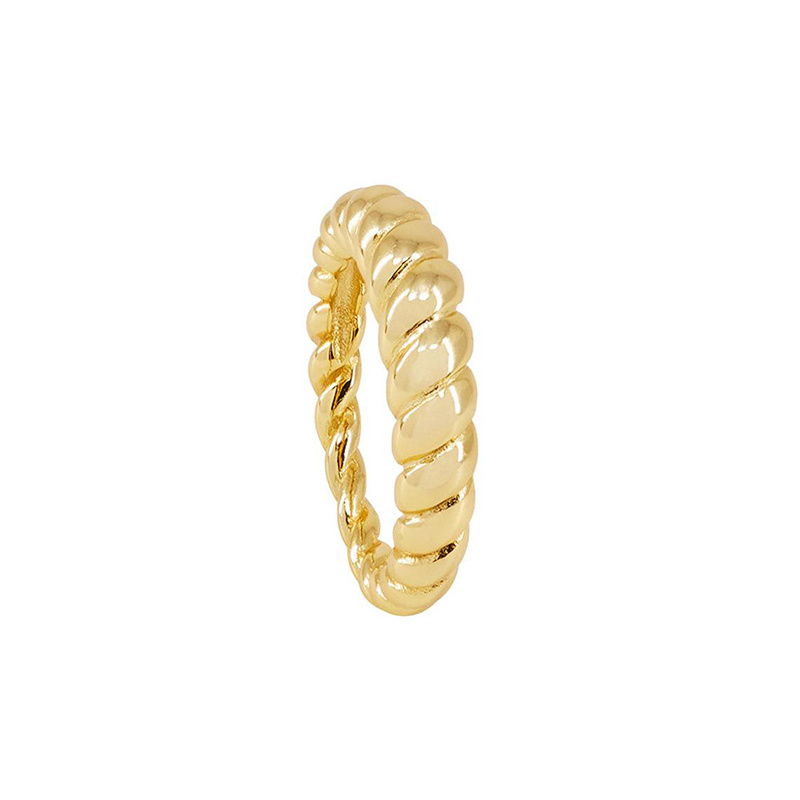
A twisted or rope-textured band. Stackable, size-tolerant, and the most forgiving ring direction to sample first because it hides minor sizing drift.


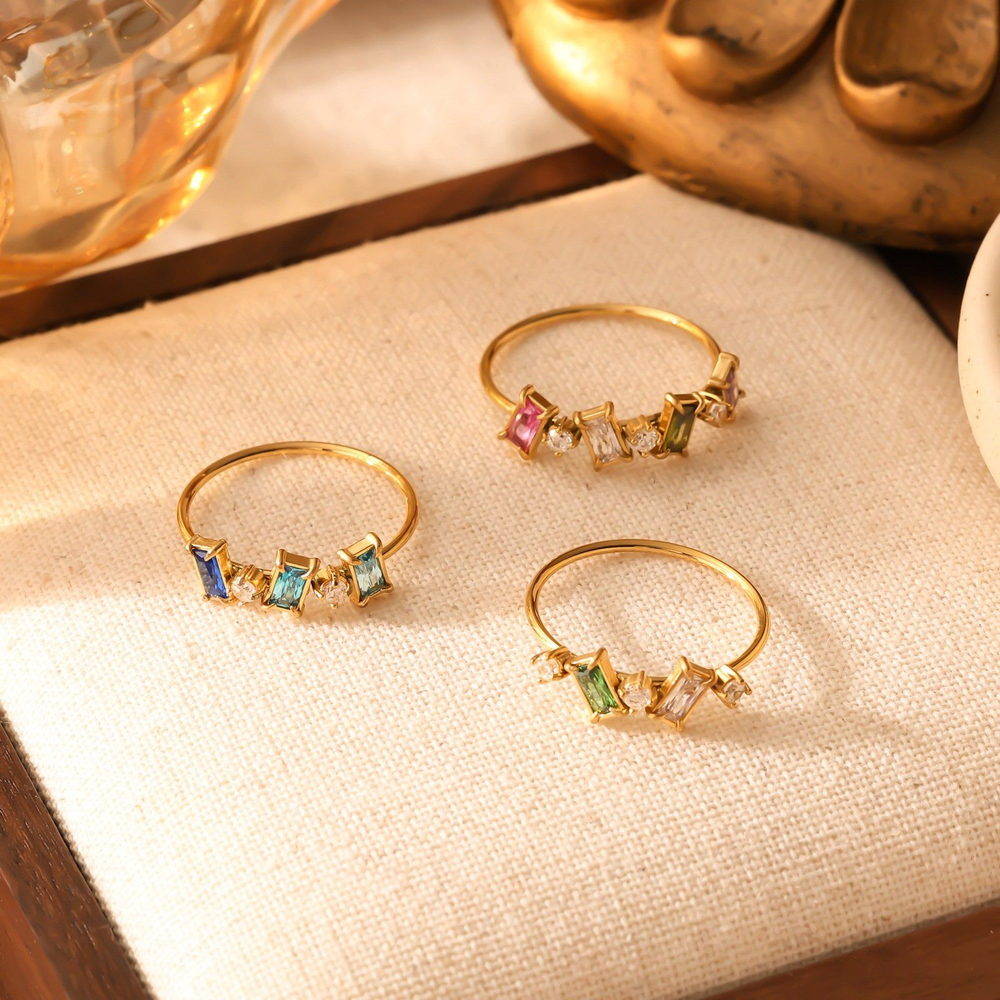
A narrow band with a row of small stones. The checks are setting quality, not appearance: stone alignment along the band, whether the setting catches on knitwear, and how many stones come back loose after a wear test.


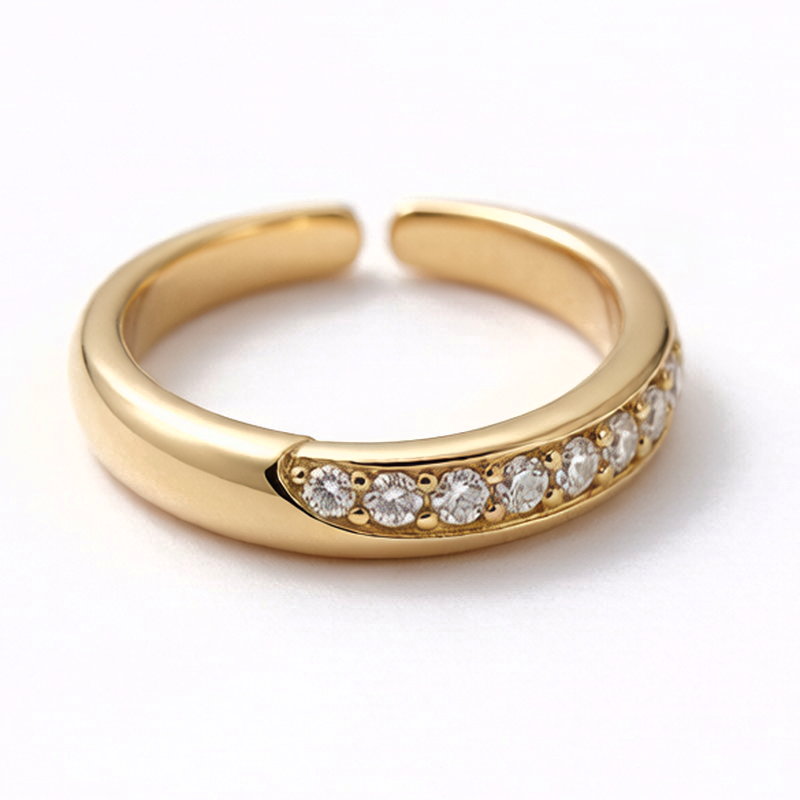
A smooth band, ideally open or adjustable. The open version is the one we push for early sampling, because it covers a size range with a single SKU. The second view is an enamel-faced open band — the same construction in a different finish.
Use this to decide where to start, not to sample all three at once.
| If your situation is… | Start with | Why |
|---|---|---|
| First time sourcing this category | Earrings — textured | Lowest production risk, fastest sample cycle, and the cheapest way to find out whether a supplier communicates clearly. |
| Price band assumes stones | Earrings — pave CZ | Setting quality is the difference between a piece that reads as jewelry and one that reads as costume. |
| You already sell earrings and need more basket | Necklaces & chains | Same buyer, same base metal, same plating route. It is the cheapest way to raise order value without opening a new supplier relationship. |
| You want a set for a boutique display | Earrings + one chain | A boutique usually needs a group of pieces rather than a single item, so a small matching pair reads as a collection instead of a sample. |
| You want to test a new price tier | Rings — open band | One adjustable SKU covers a size range, so a new tier can be tested without committing to five sizes of inventory. |
| Uncertain about your own price band | Earrings — textured | Establish the cost floor first. Adding stones or a second category to an unknown cost base makes the quote unreadable. |
Include the retail price you are targeting. If the direction you want does not fit that band, we will say so before you pay for samples.