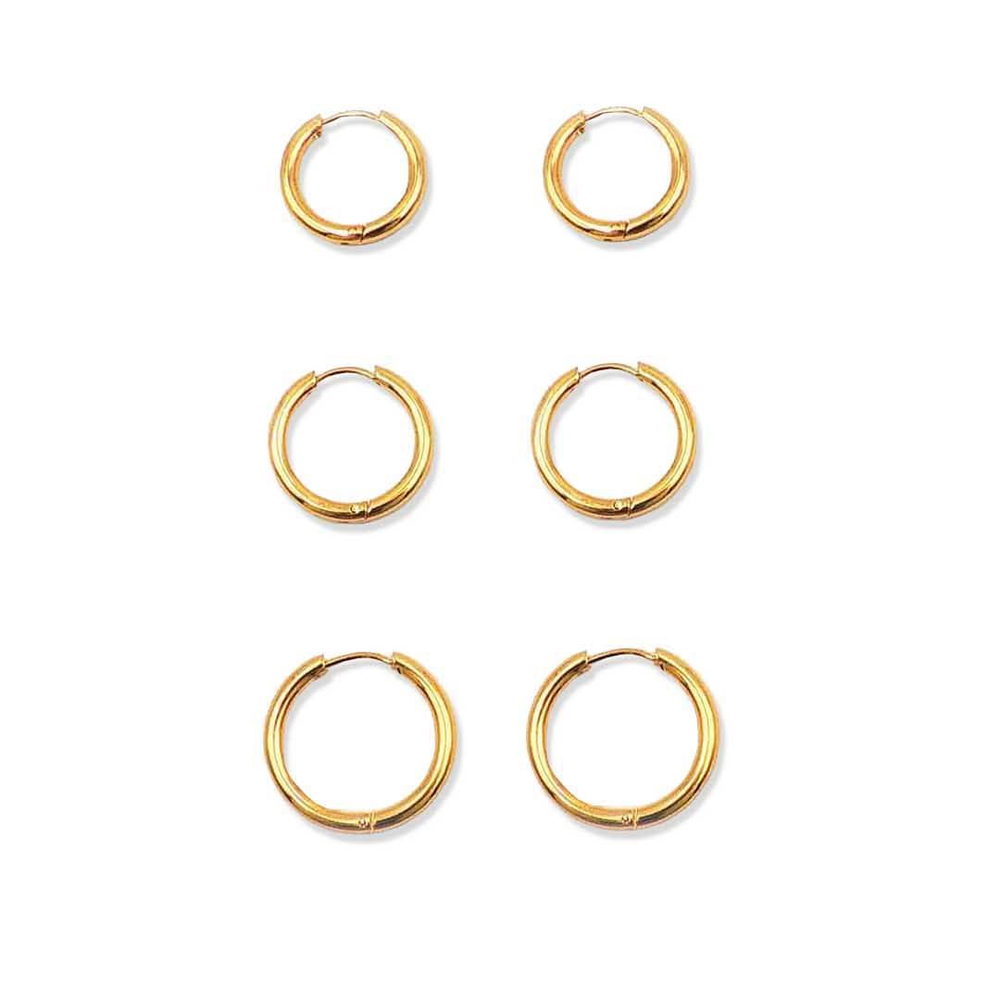
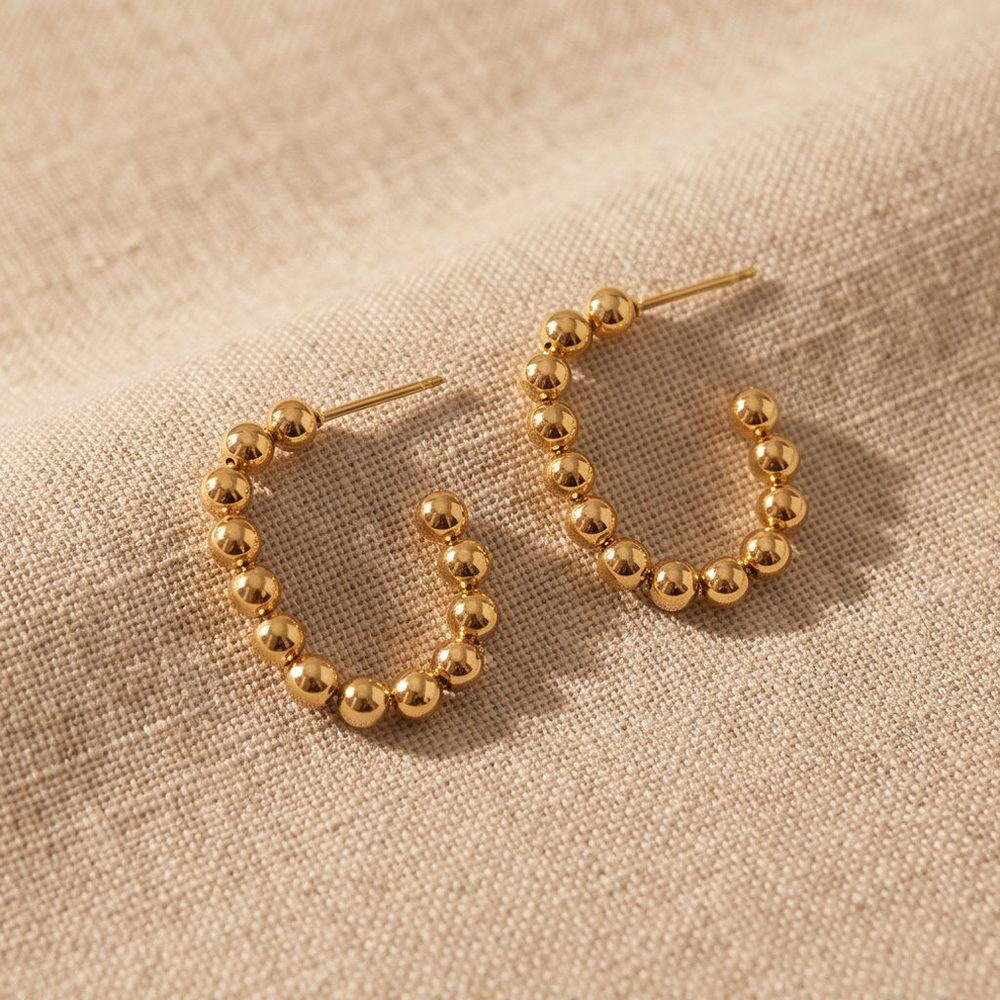
Material choice decides what can be promised, which suppliers can quote, and where the real risk sits. This page is the long version of what most suppliers put in one line — including the claims we deliberately refuse to make.
Most confusion in this category comes from one sentence: 316L is not nickel-free. It contains nickel. The reason it is still the working line is a different argument, and it is worth stating properly.
Both are gold-colour layers on a base metal. They are not the same process, and the difference matters for what you can honestly say on a product page.
| Aspect | PVD | Conventional electroplating |
|---|---|---|
| How the layer is formed | Deposited under vacuum from a vapour phase | Deposited from a liquid electrolyte bath using current |
| Relative wear resistance | Harder layer; generally the more wear-resistant of the two | Softer layer; wears faster under the same conditions |
| Colour control | Narrower range per run, tighter consistency across a batch | Wider colour range available, more drift between lots |
| Relevance to earrings | Preferred where the piece sits in a piercing all day | Common on fast-turnaround and lower entry-price work |
| What it does not give you | Neither process is a warranty period. We describe the process, and ask for the supplier's own durability test data. We do not publish a wear-time guarantee. | |
There is a widely repeated simplification that "earrings are pierced wear, so the strict limit applies". The regulation is more precise than that, and being precise here changes which questions you ask a factory.
| Tier | Limit | What it covers |
|---|---|---|
| Stricter | < 0.2 µg/cm²/week | Post assemblies — the part inserted into the pierced hole, including during the healing period. |
| General | < 0.5 µg/cm²/week | Articles in direct and prolonged contact with the skin. The entry lists the covered categories explicitly, and earrings are named in this tier. |
| Coated articles | < 0.5 for two years | Where a non-nickel coating is used, that coating must keep release below the limit for two years of normal use. This clause is what directly constrains gold-plated pieces. |
The European nickel release test method is EN 1811. A revised edition — EN 1811:2023 — was published by CEN on 22 February 2023 and superseded EN 1811:2011+A1:2015; the EU then updated the harmonised-standards list for REACH Annex XVII entry 27 on 20 December 2023. A report citing the older method is not automatically invalid, but the edition it cites tells you whether a factory's compliance file has been kept current.
Soluble nickel compounds were added to the Proposition 65 list on 26 October 2018. This is a separate regime from REACH and is not satisfied by a passing EU test alone — it is a labelling and exposure question, not only a release-rate question.
Third-party quotes collected for this type of testing ranged widely — from roughly ¥540 at the low end to ¥800–1300 from larger labs, with international quotes between $50 and $200 per sample. These are published third-party figures, not quotes we obtained. Budget ¥500–1300 per style as a planning order of magnitude.
Copper and zinc alloy gold plating is not obsolete. It is faster to sample, cheaper to quote, and it can produce shapes that stainless steel tooling handles poorly. The rule is about where it is allowed to go.
Copper and zinc alloys themselves contain no nickel. The nickel appears earlier in the process: many plating lines apply a nickel strike layer as an adhesion base before the gold layer goes on. If that intermediate layer is present and the gold wears through, release can rise.
This is why the question is not answerable by visual inspection. An incoming QC check looks at the finished outside surface — it cannot tell you what is underneath it.
These are the questions that separate a supplier with a real compliance file from one with a confident sentence. They are also the questions a buyer rarely asks, which is exactly why they are useful.
A named laboratory and a date. "We have a report" without either is not an answer.
EN 1811:2023 and the earlier 2011 edition are different documents. The version tells you whether the file has been maintained.
For any copper or alloy piercing piece this is the decisive question, and it cannot be answered by looking at the finished item.
If the answer is no, that is useful information and it arrives before money changes hands.
The coated-article clause is a durability requirement, not only a release number.
316L versus a lower grade is a material statement. The certificate is the evidence for it.
Batch size changes the plating bath. Knowing in advance which points to re-photograph is the whole point of documenting the approved sample.
This list exists because it is shorter to state what is off the table than to negotiate it later. Several of these are phrases competitors use freely.
A materially heavier regime than adult jewelry — separate lead limits and additional migration testing under Chinese national standards, plus CPSIA and ASTM F2923 requirements in the United States, which typically need their own third-party testing engagement. It is not a variation on adult jewelry sampling.
At that tier the value is in metal weight and gold price, which is a different business with different stock risk and different buyer expectations. It also removes the checking skill that matters here, which is plating and setting consistency.
Northern European and German custom programs frequently require documentation and testing scope that exceeds a low-MOQ sample relationship. Better to decline than to accept an order that cannot be supported end to end.
Send one reference and the market you sell into. We will tell you which compliance points are worth chasing for that piece, and which ones will not survive a factory conversation.